

Conversation with the CEO of a Vietnamese Group That Is a Major Partner of Hyundai and Samsung
28/04/2026
Conversation with the CEO of a Vietnamese Group That Is a Major Partner of Hyundai and Samsung
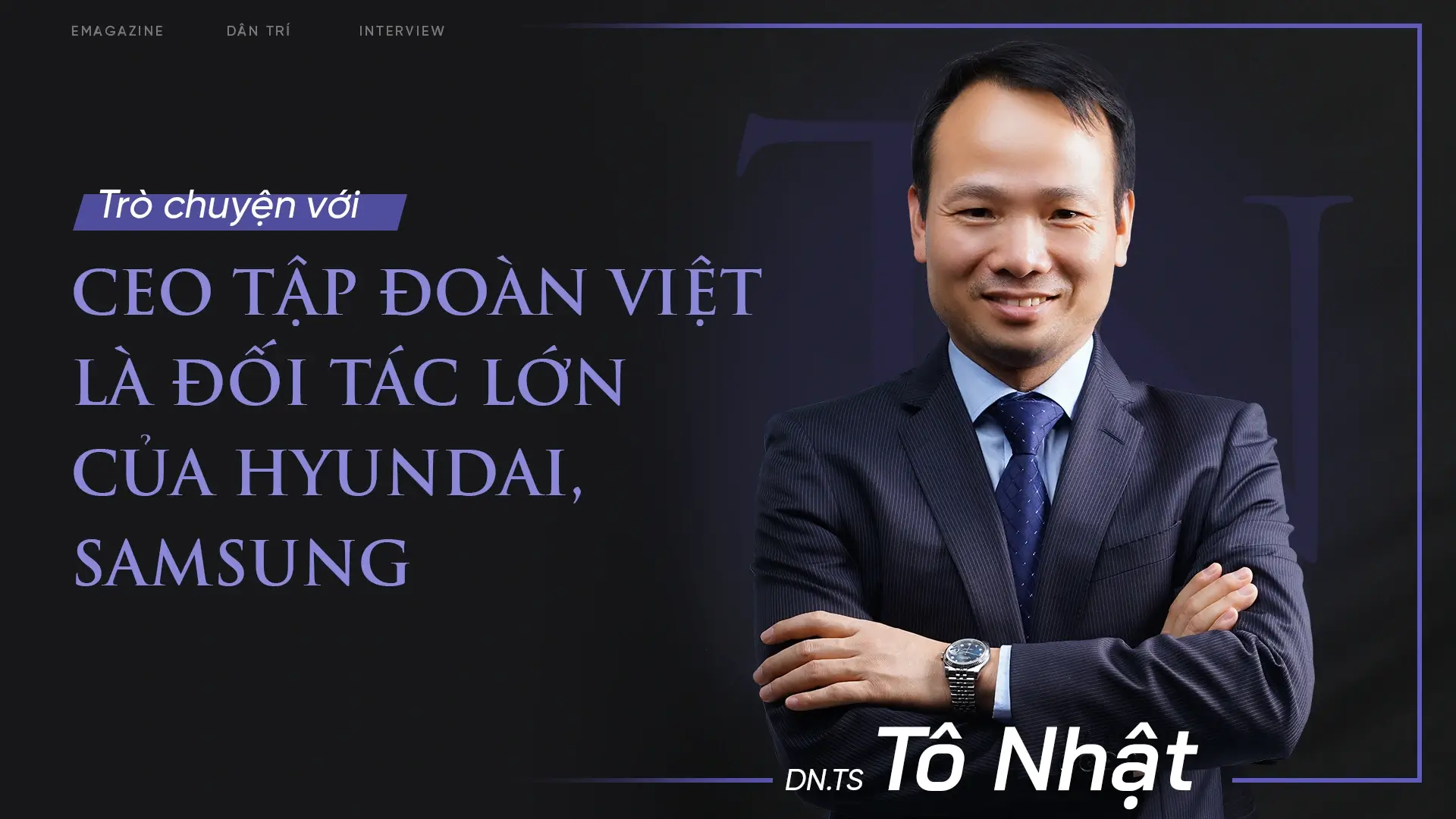
(Dân trí) – In the bookshelf of entrepreneur Dr. Tô Nhật, Vice Chairman of the Board of Directors and Chief Executive Officer of AMACCAO Group, alongside Jim Collins’ three renowned books, Great by Choice, Good to Great, and Built to Last, are many books on human development…
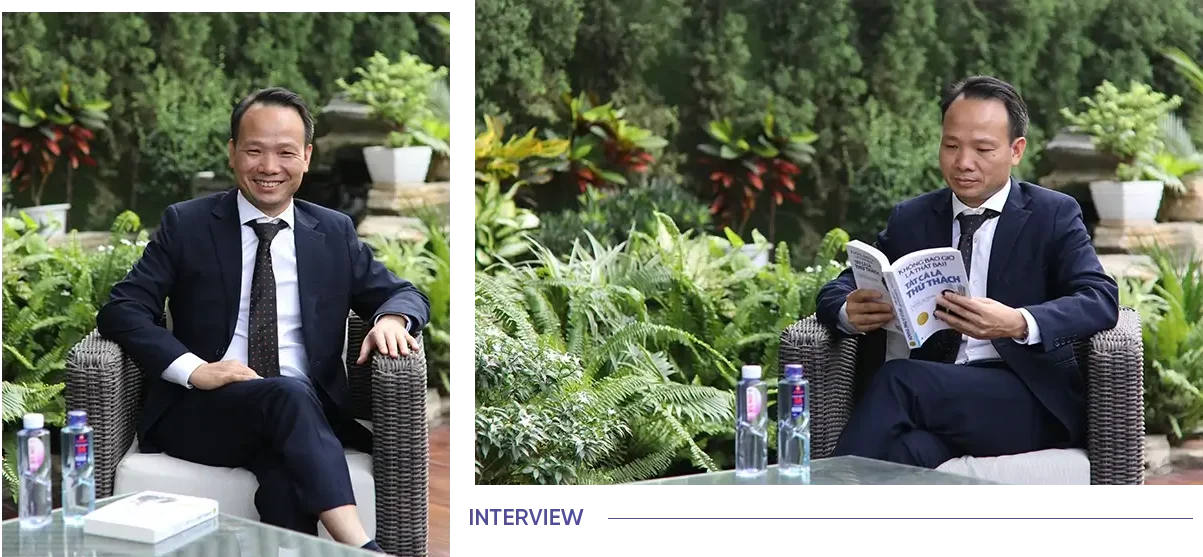
In the bookshelf of entrepreneur Dr. Tô Nhật, Vice Chairman of the Board of Directors and Chief Executive Officer of AMACCAO Group, alongside Jim Collins’ three renowned books, Great by Choice, Good to Great, and Built to Last, are many books on human development. Many of these books are still wrapped in plastic because they are intended as gifts for guests whom he holds in high regard, Dr. Nhật explained.
One of his two dreams, besides becoming an entrepreneur, is to become an educator. That is why he loves books. Surprisingly, he not only loves books but is also the author of “100 Golden Keys for CEOs & Business Owners”.
Throughout his conversation with a Dân trí journalist, Dr. Nhật spoke passionately about AMACCAO and its journey of growth—from operating out of rented premises formerly occupied by a small eatery in the underdeveloped area of Đông Anh, Hanoi, 26 years ago, to becoming a diversified group; from a small company with 40 employees to a major group with nearly 4,000 staff members. In particular, AMACCAO is also a partner of many major names such as Hyundai and Samsung in Vietnam.

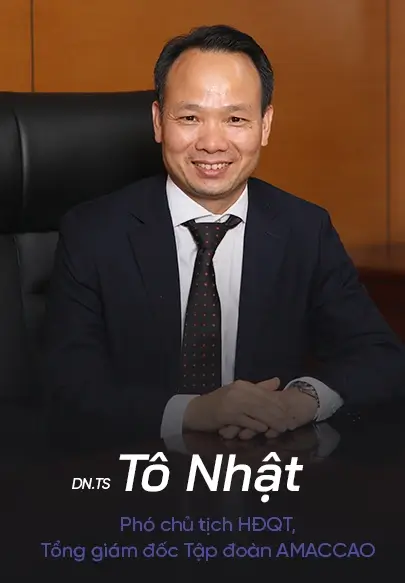
Hearing the name AMACCAO, those unfamiliar with it may think it is a foreign group or an FDI enterprise. What does the name AMACCAO mean?
AMACCAO was not originally called AMACCAO. In the early days of establishing the business, my older brother, Mr. Tô Văn Năm, Chairman of the Board of Directors of AMACCAO, named it Vietnam Construction Investment Development Joint Stock Company because he wanted to focus on investment and construction, with the orientation of building a business that would contribute to Vietnam’s development. Around a decade ago, we began to see opportunities to internationalize our business operations, so we considered changing the name.
First, the new name had to be international in nature, concise, easy to pronounce, and easy for everyone to read.
Second, AMACCAO originated in the construction and installation sector before later expanding into industrial manufacturing, energy, environmental services, education, and more. In the construction sector, “mác cao” means high grade. When people refer to high-grade steel, high-grade cement, or high-grade bricks, they automatically mean high quality. If it is already high grade, with an added “A”, then it is the “best of the best.”
We named the company with that aspiration in mind.
In addition, the name was also chosen with marketing in mind. In the digital economy, people search frequently, and the letter A is prioritized on devices. With that in mind, we renamed the company AMACCAO.
Who came up with this name, and how many options were considered?
AMACCAO was conceived by the Chairman of the Board of Directors. At the time, we did have several options, such as Avina, AvinaA, and AMACCAO. AvinaA was also the name of our wine and water factory at that time. However, we ultimately selected AMACCAO for the reasons mentioned above: it is memorable, easy to pronounce, meaningful, and suitable for pursuing global value.
How has AMACCAO progressed toward its goal of reaching international markets?
Currently, AMACCAO exports spun piles to Taiwan, and our production capacity is insufficient to meet demand. To my knowledge, we are the only purely Vietnamese company exporting this type of pile to the Taiwanese market. Of course, there are other businesses in Vietnam exporting this product, but they are joint ventures.
AMACCAO’s 3A purified water is also available in Singapore and several Asia-Pacific countries. EuroPipe plastic pipes are also exported to Laos, Cambodia, Australia, and other markets. Our brass threaded valve products are exported to South Korea, India, Japan, the United Kingdom, the United States, and more.
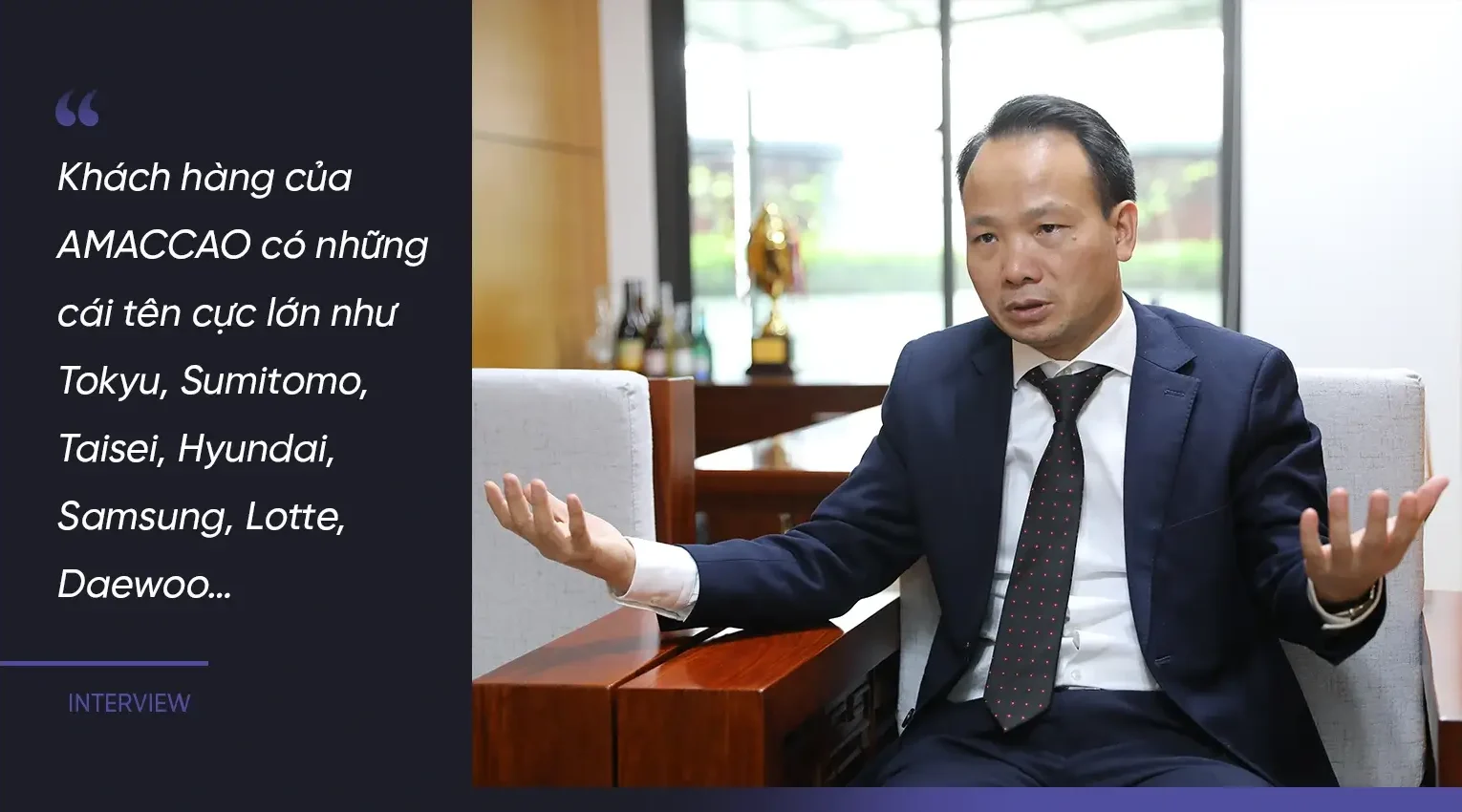
AMACCAO also engages in on-site exports, meaning it supplies goods that replace imported products. AMACCAO’s clients include major names such as Tokyu, Sumitomo, Taisei, Hyundai, Samsung, Lotte, and Daewoo.
Our company is a purely Vietnamese enterprise, but our team also includes many foreign experts. At present, due to the Covid-19 outbreak, the number of foreign experts is lower. However, there was a time when we had as many as 40 to 50 foreign experts. In fact, when there are many foreign experts, some people may assume that AMACCAO is a foreign company. But I believe we should not make such distinctions or limit our thinking by assuming that only Europeans or Americans can produce European- or American-quality products.
Vietnam also has many capable people. Just look at billionaires Phạm Nhật Vượng, Nguyễn Đăng Quang, or Nguyễn Thị Phương Thảo.
When we talk about internationalization at AMACCAO, it means, first, exporting; and second, replacing imported goods by selling to foreign companies operating in Vietnam. I jokingly call this “on-site exporting.”

AMACCAO operates across multiple sectors, as an industrial manufacturing group doing business in construction materials and infrastructure equipment, bottled water, wine, plastic packaging, education and training, real estate investment, environmental services, and clean energy. Building such a substantial enterprise must not have been easy. What were the early years of entrepreneurship like for you and your brother?
I will never forget the early days when my older brother built AMACCAO. It was 1995, and I was still at university. My brother rented premises that had previously been occupied by a small eatery on National Highway 3 in Đông Anh, Hanoi, to start the business. His friends even worked in shorts and undershirts. Until 2001, the company still had to rent premises like that to operate. I will never forget those years. In the early stage, my brother handled nearly everything himself—the very image of a small business owner. He woke up at 6:00 AM to mobilize the team, worked until 10:00 or 11:00 PM, and sometimes entertained clients until 1:00 AM the following morning. It was extremely demanding.
For the first 10 years, the company focused on rural infrastructure projects such as village roads, drainage ditches, and road base construction. Why did we choose this sector? There was nothing particularly grand about it. Large enterprises did not do this work or pay much attention to it. My brother had studied at the University of Civil Engineering and received formal, systematic training, so that was how he began his entrepreneurial journey. During the first 10 years, the company had 40 employees and focused solely on construction and installation.
Later, as he managed the growing company, he became increasingly exhausted and concerned, with little time left for himself or his family. At that time, I was studying in the United Kingdom, and he called me home to work with him.
Does that mean you only began participating in AMACCAO in 2008? Why not from the beginning?
After graduating from university, I immediately pursued an MBA in Bangkok, Thailand. I then returned to teach at the National Economics University for a period before going to the United Kingdom to pursue a doctorate. I had always carried the aspiration of becoming an entrepreneur, so when my brother told me, “Come back,” I began researching his company in 2005 and officially returned to take part in management in 2008.
After I returned, AMACCAO expanded into new business areas. From the original 40 employees, the group has now grown to nearly 4,000 employees. The system has also been automated, and individual units have been established based on the principles of financial autonomy and a group model. The two brothers complement each other well. One is bold in investment, with vision and strong practicality. The other has formal training and a sound management system.

You once said that no one is born knowing how to do business or build an enterprise. How did your journey to becoming an entrepreneur unfold?
I come from a large family of seven siblings. Because there were so many children, there were periods when three siblings were studying at the same time. My parents were farmers, and raising us was extremely difficult.
When I was 15, my brother, my sister, and I began trading to help support our parents. My brother and I bought liquor in Đại Lâm, Bắc Ninh, and sold it in Đông Anh, Hanoi. Later, we traded Bình Đà firecrackers, during the period when firecrackers had not yet been banned, and transported agricultural products from Đông Anh to inner-city markets for sale. When hunger strikes, even your knees must crawl, as the saying goes. (Laughs)
I then entered the National Economics University and continued to study while trading. Around 1992 to 1994, children liked buying teddy bears and characters such as Doraemon. After trading teddy bears, I traded shoes, bánh chưng, and other items. If there was profit to be made, I would do it.
In 1995, after saving a modest amount of capital from my trading days and borrowing additional funds, I began my first business venture. Together with two close friends, I opened the first karaoke café on Hào Nam Street. Six months later, the café went bankrupt. It was not because we could not sell, but because we were inexperienced and did not sign a contract with the landlord. When the landlord saw that the business was doing well, they forced us out and refused to continue renting the premises. We had to close the café, transfer the equipment, and end our first venture of that scale.
In 1999, after completing my studies in Bangkok and returning home, I started my second business venture one year later, in 2000. This time, I opened an office supplies trading company. Less than a year later, the company closed because I did not know how to manage finances.
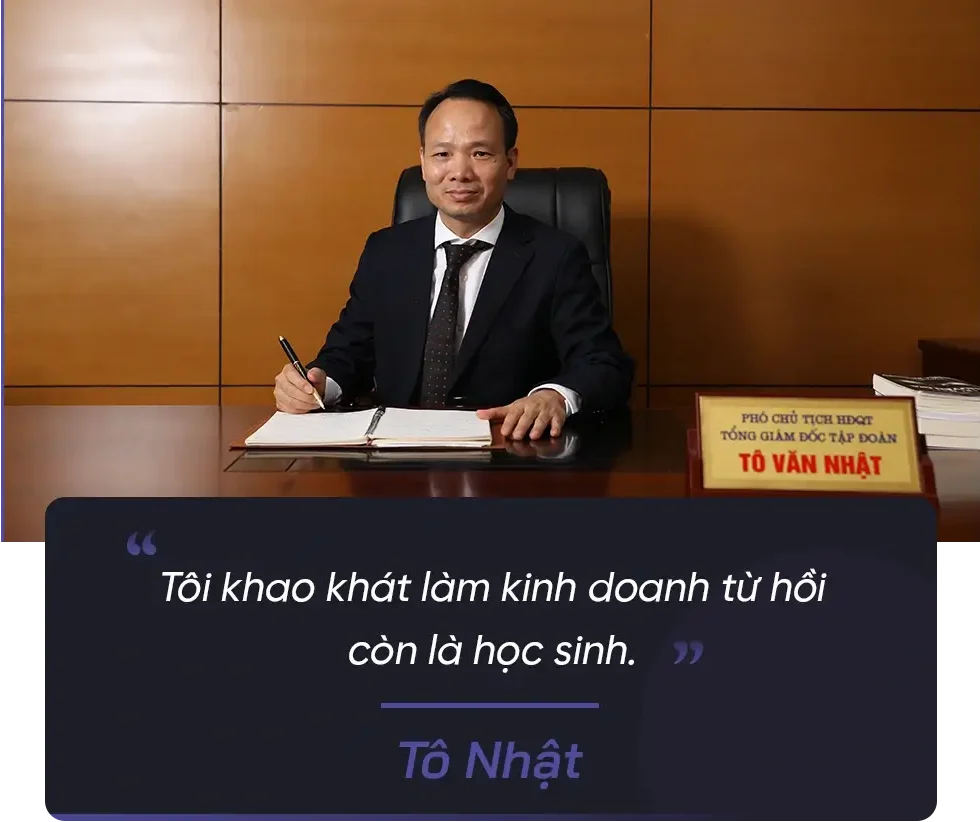
This shows how deeply I aspired to do business from the time I was a student. After those early failures, I realized, “Becoming an entrepreneur is not easy.” I even began to doubt myself. At that point, I told myself, “Perhaps I should focus on teaching for a while,” so I went on to teach at the National Economics University.
But the desire to do business continued to drive me. While studying for my doctorate in the United Kingdom, I conducted in-depth research on small and medium-sized enterprises. I thought: “A high mountain must begin with small mounds of earth. Therefore, if you want to build a business, simply begin with the first steps.”
I studied in the United Kingdom for five years, from 2003 to 2008. However, in 2005, my brother contacted me because he knew I still wanted to do business. I returned to Vietnam, collected data from the company, and told him, “If you continue doing things this way, it will be extremely exhausting. If everything has to go through your hands, the business will not be sustainable. We need an automated system and a strong brand.” My brother replied bluntly, “Then come back and do it.”
In 2007, he called again and asked when I would finish my studies. In 2008, I returned. At that time, I was a doctoral researcher and also teaching at the University of London in the United Kingdom. He said that I should return so we could build the business together. Later, within AMACCAO Group, I also developed three business units of my own and took overall responsibility for system development strategy, management, and operations across the group.
You returned to Vietnam and joined AMACCAO in 2008. Not long afterward, the economy entered a recession. Were you afraid of encountering such difficulty immediately after returning?
I will never forget that year. The entire economy was facing serious hardship. Loan interest rates reached 24% to 25% per year. Many companies went bankrupt. The real estate market froze. The construction and construction materials sectors were severely affected. At that time, we convened a Board of Directors meeting and decided that some employees would need to take Fridays and Saturdays off. Even so, during the most difficult period, we still ensured that employees had work for more than five days each week.
In addition, we had to reduce costs by not charging depreciation in order to support customers and enable the company to maintain operations. Fortunately, in 2009 and 2010, the company expanded into real estate, which provided some financial accumulation and reserves. Everyone in the company also remained united and committed. This helped AMACCAO overcome the crisis successfully.
That experience became an invaluable lesson that helped us navigate three economic crises smoothly. When Covid-19 broke out in March 2020, we already had experience in handling crises. Therefore, despite the difficulties in 2020, AMACCAO still achieved growth of more than 20%. At Lunar New Year, everyone in the company was surprised because while many construction businesses were struggling, AMACCAO employees still received salaries and Tet bonuses that were no lower than in previous years.

I have also heard that you have another dream related to education?
When I was young, my family was very poor. My mother was the only child of a Confucian scholar, so she strongly wanted her children to pursue teaching. My older brother, Mr. Tô Văn Năm, Chairman of the Board of Directors of AMACCAO, also studied pedagogy before later switching to construction engineering. My sister-in-law is a teacher, and my wife is also a teacher. There are many educators in my family.
As a child, I also thought that I would become a teacher one day, so that I could educate children. However, when I was in sixth grade, I began having my first reflections about myself. That year, I visited my mathematics teacher’s home with friends during Tet. I saw that his family was very poor. None of his children had become successful. I began to think about my own future.
I also witnessed another teacher, who taught chemistry. At around 4:00 AM, he would go to slaughter pigs, transport them to the market for his wife to sell, then return home, put on formal clothes, and go to teach. The image of two talented teachers still having to struggle economically stayed with me. I temporarily gave up my dream of becoming a teacher and resolved to study economics and become wealthy. That was why I did not apply to the University of Education but instead chose the National Economics University.
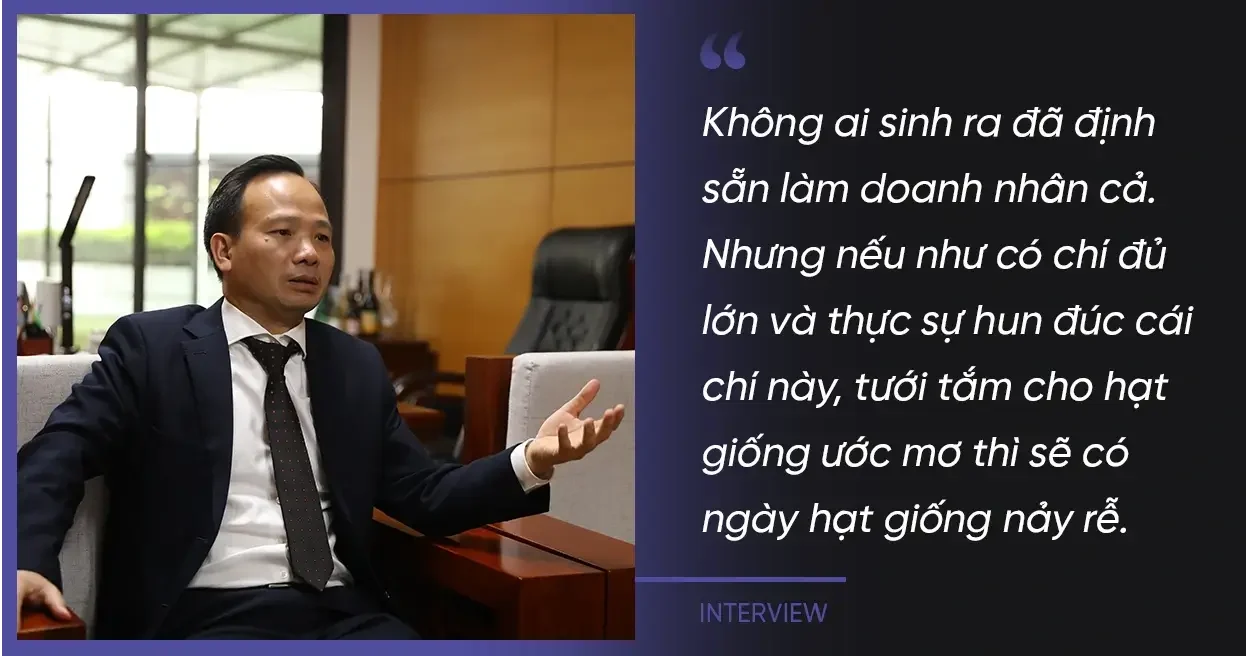
When my startup ventures failed, I also struggled deeply and kept wondering whether I was suited for business. After all, no one is born destined to become an entrepreneur. But if you have sufficiently strong determination and genuinely nurture that determination—watering the seed of a dream—then one day, the seed will take root. Reality has proven that this is true.
So which is more interesting: being an entrepreneur or being a teacher?
When I studied for my MBA in Thailand, several entrepreneurs came to teach us. At that time, I exclaimed, “How wonderful this is—to be taught by people who have directly experienced business, with such practical insight.” From then on, I told myself that I would have to do something similar in the future, become successful, and share my experience with others. That dream emerged more than 20 years ago. I was so excited at the time that I even wrote it down in my notebook, which my wife later read.
I then considered how to build my own school, share knowledge, and create a forum for people like me who wanted to learn. I wanted to make it possible for people to build legitimate wealth. Honestly, entrepreneurs and small and medium-sized business owners often do not know whom to ask when they are starting out. Therefore, four years ago, I raised the matter with my brother: “I am involved in business, but I still love education—it is truly a passion. I want to share and teach other businesses.” My brother supported me. In fact, when I say teaching, I only share on two weekends each month or one evening per week.
I see that you have a YouTube channel. It is quite engaging, with heartfelt sharing about leadership skills and business management. It seems relatively rare in Vietnam for entrepreneurs to have YouTube channels, as many Vietnamese business leaders tend to be less open for various reasons. Why are you different?
AMACCAO has developed on a scientific foundation. The company’s philosophy is “Let righteousness govern, let science lead.” Therefore, we always seek scientific values to help the business develop sustainably. AMACCAO’s achievements over 26 years are based on a development perspective that values humanity’s intellectual heritage.
Therefore, I believe that using a YouTube channel to share scientific knowledge with a wide audience is beneficial for the group. It helps me fulfill my personal dream while also building recognition for the corporate brand. When you give, you also receive.
I have always believed that each person is born only once and cannot take anything with them afterward. Therefore, whatever I can share, I share with people who enjoy learning and with businesses that are coming after us. Even if larger companies listen, we are not afraid of competition. I enjoy competition because it is beneficial. In business, we often learn from one another, and we can learn something from competitors as well. The stronger the competitor, the better we become. What makes me happiest is hearing small businesses say that after listening to my sharing, they saved a great deal of time. One company with nearly VND 200 billion in capital said that before studying with Dr. Nhật, they only had a flashlight; after studying, they had the equivalent of an automobile headlight. At that moment, I truly felt happy.
Your teachings mention business leadership qualities such as unconventional thinking, decisiveness, inspiration, the ability to paint a future vision, compassion, and kindness. In your view, what are the three most important qualities?
There is an English saying: “A leader is doing the right thing.” Therefore, first, a leader must know what is right. Wisdom, understanding, knowledge of natural principles, and the ability to recognize what is correct are all important. Leaders are decisive because they know with certainty that something is right. Even if 99 people say no, the leader may confidently say yes alone. That is leadership.
The Bible says, “If the blind lead the blind, both will fall into a pit.” Leaders must lead, so they need to learn continuously and identify what is right. Be strong and take action when something is right, even though leadership can be very lonely. Anyone in a leadership role will at times feel isolated and alone.
Second, leaders need to know how to inspire their teams, enabling people to work wholeheartedly and dedicate themselves to their work and shared goals.
The third quality is kindness. Of course, acting according to what is right already includes kindness. However, leaders need to lead with their hearts, sincerity, and love. These qualities are powerful. When you act with all your heart, kindness, and sincerity, everything becomes sustainable.

Speaking of leadership, I see that many members of AMACCAO’s leadership team are your relatives. Is working with family members difficult or easy, and what principles are involved?
In Vietnam, many small and medium-sized enterprises become stuck and cannot grow because of this issue. Family members work together and have been together since the early days, but when the business develops further and wants to bring in external talent, family members often become emotionally affected or develop concerns. This prevents the business from becoming truly professional.
Second, family members often bring personal emotions into work. Therefore, it can be quite difficult. When I first joined the company, I witnessed a relative become angry with my older brother and refuse to visit his home for four years because she had been criticized for unprofessional conduct during a meeting. I realized that if we continued in that way, the business could not grow and would struggle to attract talented people. I believed we needed to change. Of course, there are large family companies in Vietnam. However, for a family company to scale, several principles are required:
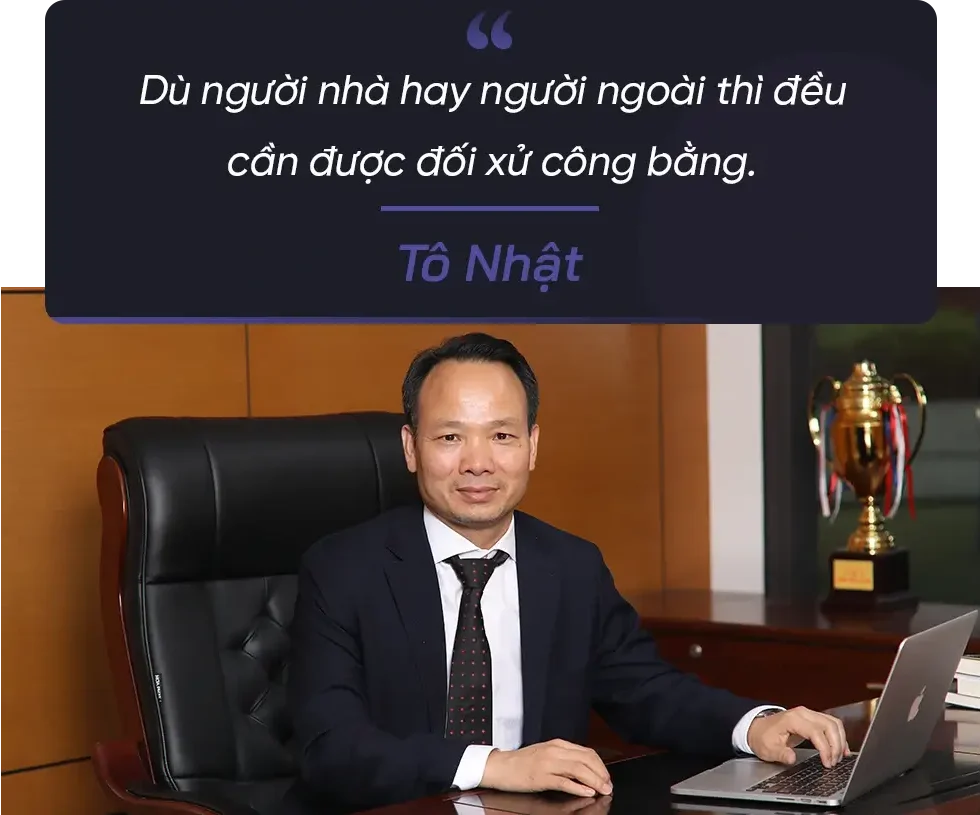
First, whether they are family members or external employees, everyone must be treated fairly. To ensure fairness, clear regulations are necessary. Therefore, when I joined the company, I spent three months developing transparent reward and disciplinary policies.
Second, with family members, especially close siblings, we need to sit down together and make it clear that within the company, work must come first, and there must be leadership hierarchy and levels. At home, we can still be family.
At first, this was very difficult because people brought emotions into work. My older sister even cried and felt upset, but once the rules were in place, everyone became accustomed to them. Today, things are highly professional. Even children or relatives working in the company can still be disciplined or dismissed if they make mistakes.
At AMACCAO, family members are not automatically given positions or jobs simply because they are relatives. However, if they are capable and possess both integrity and talent, it is natural to give them priority. We also prioritize talented and ethical people from outside the family when recruiting. But if they lack capability, then even family members must step aside and allow others to take on the role. Applying this approach was difficult at first, but later it became much easier. Today, I do not see AMACCAO as a family company anymore, but it is still the AMACCAO family because everyone who joins becomes a member of the AMACCAO family.
What proportion of AMACCAO’s current workforce consists of your relatives?
The company has nearly 4,000 employees, so how could there possibly be that many relatives of Tô Nhật? (Laughs) I do not count people with the surname Tô, because there are many people with that surname in my hometown, and many people named Tô work at AMACCAO. As for my own children and relatives, there are many in the family, but not many work in the company. Young people today are very independent and do not rely heavily on relatives.
My brother and I also have a clear principle. Our children are free to work elsewhere. If they are capable, they can return to manage their fathers’ or uncles’ companies. But they should not assume that they are guaranteed a position. Taking over a business requires the ability to lead and continue its growth journey.
When working with relatives, do conflicts ever arise between you and them?
Of course. My wife joined the company as chief accountant after graduating. I was the CEO. The pressure was intense, and when the accounting team made mistakes, I reacted angrily. Eventually, my wife left to work elsewhere. Later, when she returned to work at the company, everything was different, and she came to recognize that I had been right. As for my siblings, as I mentioned earlier, it is true that my older sister cried many times because she was upset with her younger brothers.
When working with the Chairman of the Board of Directors, I have also reacted strongly at times. Later, he called me into his office and told me directly that if my feedback was correct, the Chairman still had to listen, but I needed to express it calmly and not bring strong emotions into work. I believed he was right.
Everyone is human, so it is impossible to avoid bringing emotions into work entirely. Differences in viewpoints can arise, but the guiding principle remains the common interest of the company. Honestly, there were times when the Chairman of the Board of Directors of AMACCAO and I disagreed so strongly that I had to defend my viewpoint for four or five years before it was implemented. For example, I believed that we needed a dedicated independent Supervisory Board. Initially, my brother did not agree and wanted the Supervisory Board to work on a part-time basis. However, as AMACCAO grew stronger and expanded into major export markets, having a dedicated independent Supervisory Board became necessary.

Returning to AMACCAO, you mentioned that despite the difficulties in 2020, the company still achieved double-digit growth. How has growth been this year so far?
So far, growth has exceeded 30%, which is much better than in 2020. AMACCAO’s target for the entire year is 25%, and we have already exceeded it. Fortunately, our brand has performed well in recent years. Customers keep recommending us to one another, so orders continue to increase. We have quality products meeting European standards, a broad system, and a strong brand. Because we sell at scale, we can reduce costs, optimize depreciation per product, and offer highly competitive prices. I often joke that many investors initially gave us a bowl, then a teapot, and eventually an entire tray. This makes us very happy.
Do AMACCAO’s leaders intend to list the company on the stock exchange?
Certainly. To become sustainable, we also need to list shares on the stock exchange, but we must choose the right time. We have not yet decided on an exact timeline, but it will definitely happen in the future.
In the past, you did not pursue pedagogy because you wanted to study economics. Once your business career became stable, you returned to education. Honestly, do you now feel that you are wealthy enough?
I do not know how others define wealth. But now, I feel joyful, happy, and comfortable with my life. I am not saying this to show off, but what I feel now is a sense of ease, and I have been able to fulfill both dreams: being an entrepreneur and working in education. What could be better than that? Of course, I still primarily manage the business and devote 80% of my time to it. However, I can use the remaining 20% to share and contribute the values, knowledge, and experiences I have gained to the entrepreneurial community and young businesses. That is already something to be grateful for.
Speaking of dreams, I see that many businesses have established strategies through 2045 in alignment with Vietnam’s orientation toward becoming a strong and prosperous nation. What about AMACCAO?
Honestly, when we first established the business, no one imagined we would reach where we are today. At that time, my brother only focused on how to survive, become prosperous, and develop.
Once the company had survived and grown for 10 years, AMACCAO began thinking about expanding from the outskirts into the capital, covering provinces across the country, and gradually entering export markets.
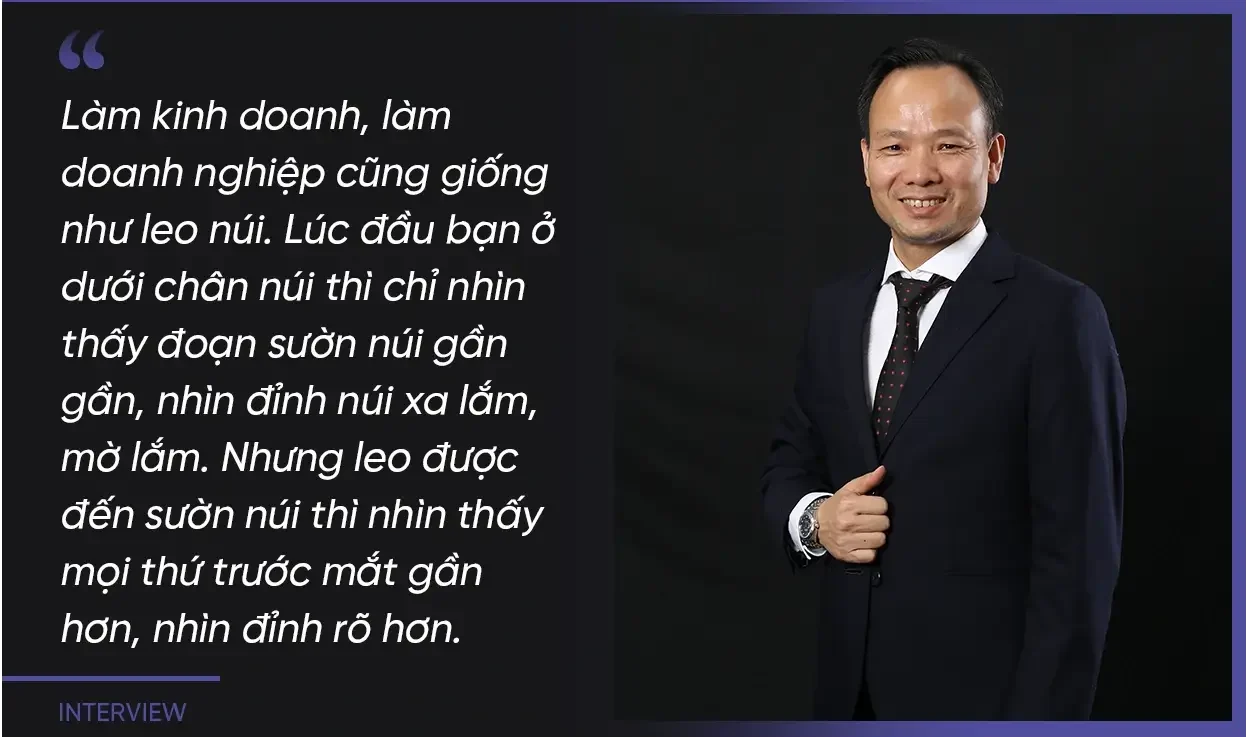
Doing business and building an enterprise is like climbing a mountain. When you are at the foot of the mountain, you can only see the nearby slope, while the summit appears distant and unclear. But when you climb to the mountainside, you can see what lies ahead more clearly and the summit becomes more visible.
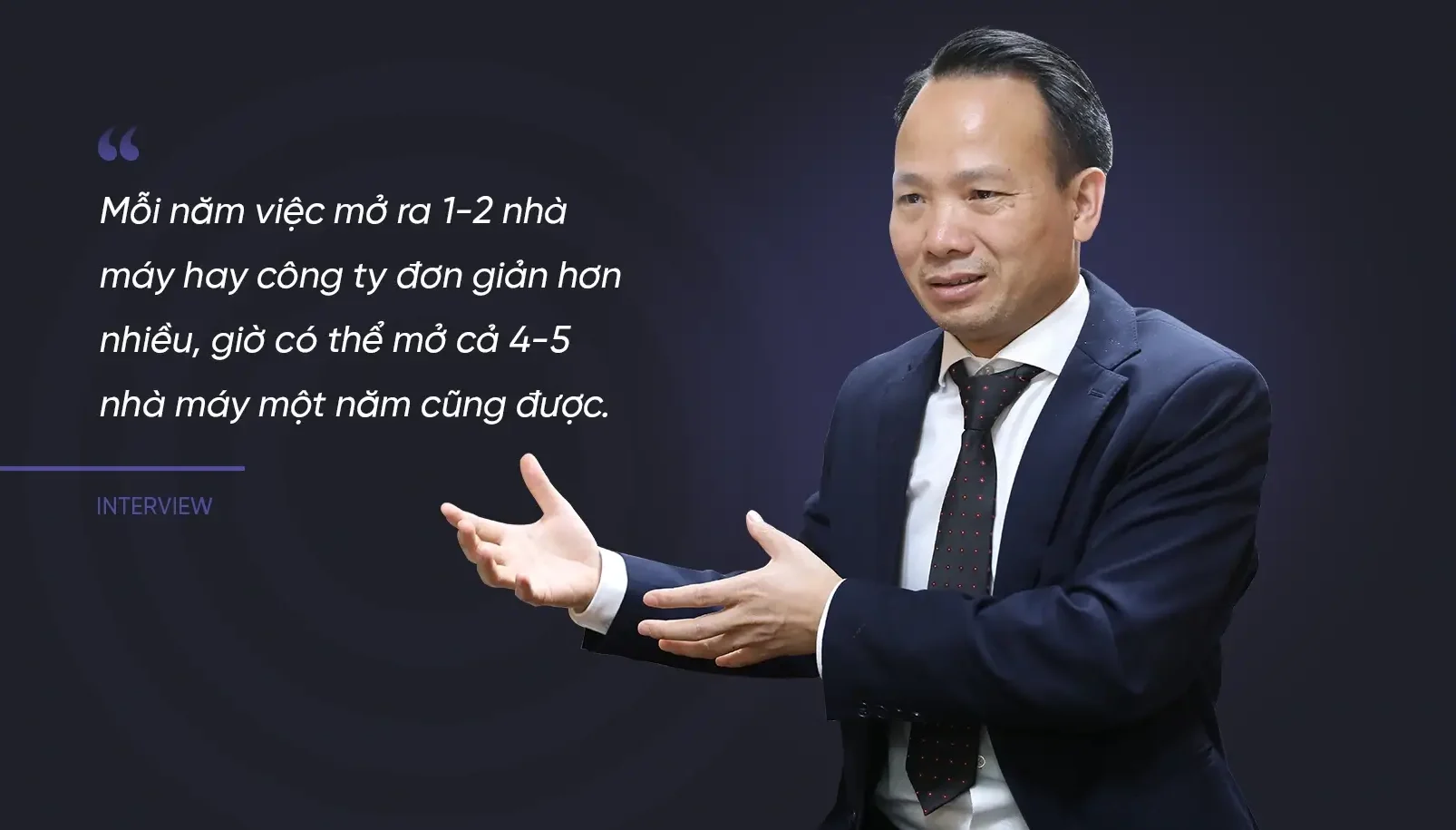
AMACCAO’s vision is similar. We do not dare to claim greatness or anything of that kind, but we strive to do well every day, every month, and every year. First, we determine that we must become one of the leading companies in the sectors we choose. In reality, AMACCAO has achieved this. For example, we rank first in Northern Vietnam and among the top two nationwide in concrete drainage pipes and piles; we are among the top three in the country in concrete components; EuroPipe is one of the top three plastic pipe brands; and we are the only company offering products with a 30-year warranty.
When businesses become self-reliant, the nation becomes prosperous. I have always believed that.